
When developing a solar-powered outdoor device, choosing the right solar panel material involves more than comparing power output and dimensions.
For outdoor IoT sensors, environmental monitoring equipment, GPS tracking devices, and other electronic products, the solar panel may become part of the device enclosure.
This creates several important design questions:
- Is PET suitable for continuous outdoor exposure?
- Does ETFE offer better UV and weather resistance?
- Do all ETFE solar panels have a raised or bumpy surface?
- Can ETFE panels have a finer, smoother-looking finish?
- Can the backing material be black?
- Why is there a border around the solar cells?
- Can a solar panel be bonded directly to an equipment enclosure?
These questions affect not only the appearance of the solar panel but also its integration, manufacturing process, and long-term reliability.
In this guide, we compare PET vs ETFE solar panels and explain how surface texture, laminate structure, edge sealing, and mounting methods influence custom solar module design.
Why Surface Material Matters for Outdoor Solar Panels
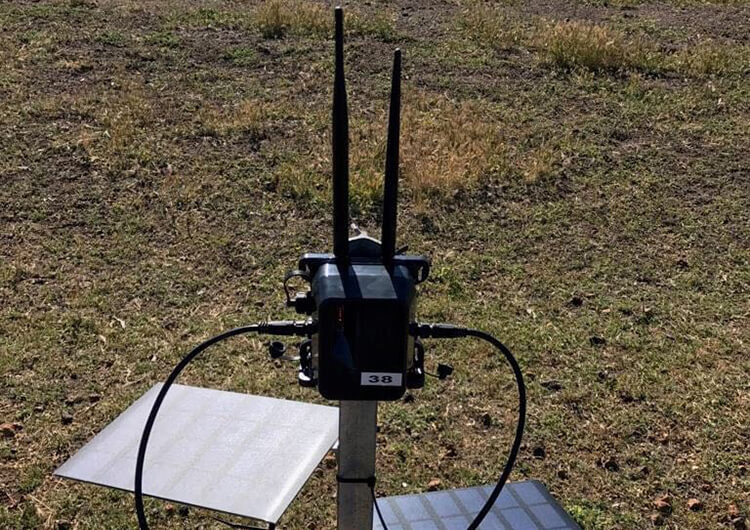
For many outdoor electronic devices, the solar panel is not installed as a separate rooftop component.
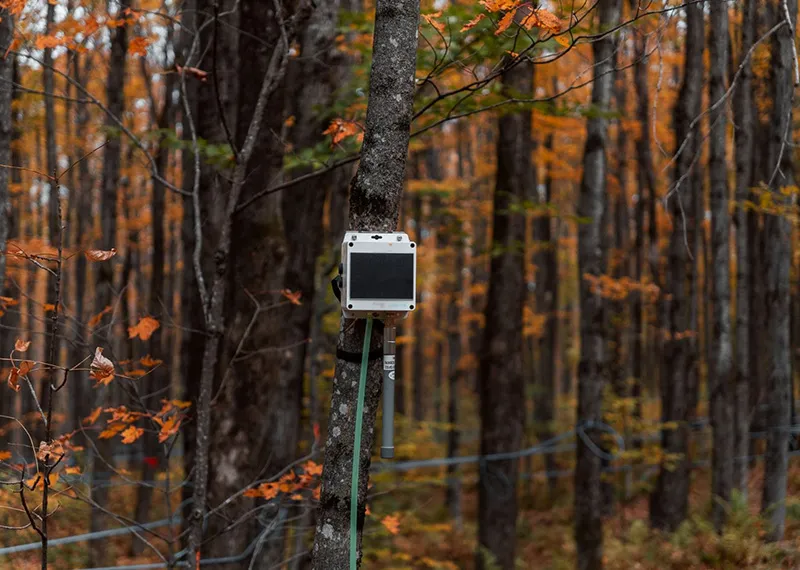
Instead, it may be integrated directly into:
- Environmental monitoring instruments
- Outdoor IoT sensor enclosures
- GPS tracking equipment
- Smart agriculture devices
- Remote monitoring systems
- Wireless communication equipment
- Portable outdoor electronics
In these applications, the front surface material needs to be evaluated together with the complete module construction.
Important considerations include:
UV Exposure
Will the module receive direct sunlight throughout its operating life?
Moisture Protection
Will the module be exposed to rain, humidity, condensation, or standing water?
Mechanical Integration
Will the panel be bonded to a plastic enclosure, mounted with screws, or installed in a recessed surface?
Product Appearance
Does the customer require a glossy, embossed, matte, or fine-textured finish?
Expected Service Life
How long should the product operate outdoors before replacement or maintenance?
These requirements should be understood before selecting the front surface material.
Engineering Note: The best front material is not simply the one with the lowest cost or the highest UV resistance. It is the material that fits the complete product design and its expected operating environment.
PET vs ETFE Solar Panels: Key Material Differences
PET (polyethylene terephthalate) and ETFE (ethylene tetrafluoroethylene) are polymer materials that can be used in solar module constructions.
However, their material properties and outdoor performance characteristics are different.
PET Solar Panels
PET is commonly associated with lightweight, thin, and cost-sensitive solar module designs.
Depending on the material grade and surface treatment, PET can provide a smooth or glossy appearance.
Its potential advantages include:
- Relatively low material cost
- Lightweight construction
- Smooth surface appearance
- Compatibility with certain compact module designs
However, PET is not one single material specification.
UV-stabilized PET, coated PET, and standard PET may perform differently under prolonged outdoor exposure.
For permanent outdoor applications, the specific PET film and complete laminate construction need to be evaluated for UV resistance, yellowing, surface degradation, and long-term reliability.
ETFE Solar Panels
ETFE is a fluoropolymer known for its strong inherent resistance to UV exposure and outdoor weathering.
For this reason, ETFE is often considered for customized solar modules intended for outdoor electronic applications.
Potential advantages include:
- Strong inherent UV resistance
- Good weathering resistance
- Lightweight construction
- Different available surface textures
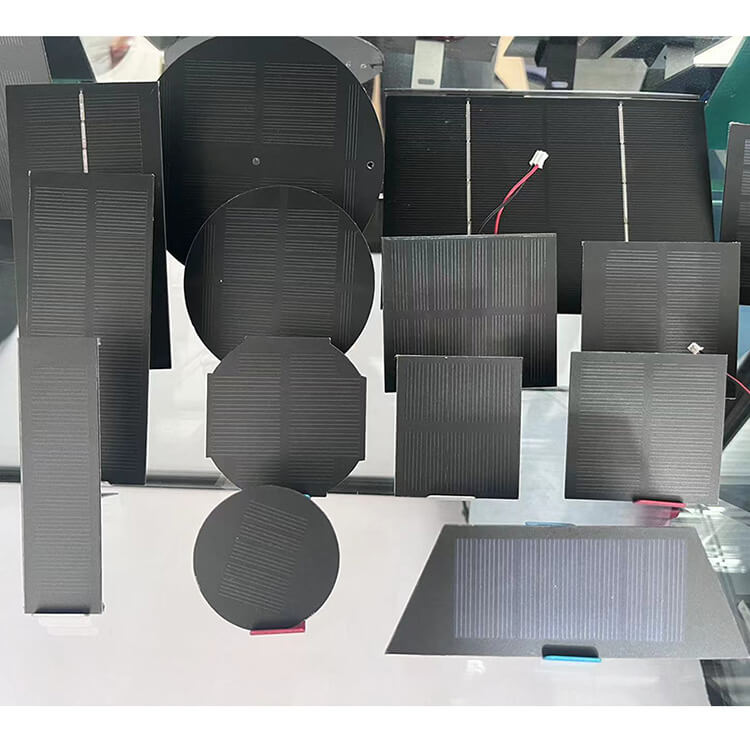
- Compatibility with customized module dimensions and shapes
- Suitability for many outdoor electronic applications
However, ETFE does not automatically guarantee the lifetime or waterproof rating of the complete solar module.
The encapsulation materials, backing structure, edge sealing, electrical connections, and installation conditions also matter.
PET vs ETFE Comparison
| Design Factor | PET | ETFE |
|---|---|---|
| UV resistance | Depends on grade, coating, and stabilization | Generally strong inherent UV resistance |
| Long-term outdoor use | Requires material and module validation | Often preferred for outdoor designs |
| Surface appearance | Smooth or glossy finishes available | Embossed and fine-textured finishes available |
| Weight | Lightweight | Lightweight |
| Custom dimensions | Available | Available |
| Weathering performance | Depends on complete construction | Good material-level weathering resistance |
| Material cost | Often lower | Generally higher |
| Waterproofing | Depends on complete module | Depends on complete module |
| Typical design consideration | Cost-sensitive or qualified applications | Outdoor durability and customization |
The important distinction is that front-film performance and complete solar-module reliability are not the same thing.
Is PET Suitable for Permanent Outdoor Use?
A common question is:
“Is PET unsuitable for outdoor solar panels because of UV exposure and aging?”
The answer depends on the PET material and the expected operating conditions.
Standard PET films may experience changes such as yellowing, loss of mechanical properties, or surface deterioration after prolonged UV exposure.
However, some PET materials are specifically formulated or treated for improved outdoor durability.
Therefore, it would be inaccurate to say that all PET solar panels are unsuitable for outdoor use.
The more practical questions are:
- What PET film grade is being used?
- Is the film UV-stabilized or coated?
- Has the complete module been tested for outdoor exposure?
- What operating temperature range is expected?
- What is the required service life?
- How will the panel be mounted and sealed?
For products intended for continuous outdoor operation, ETFE is often a strong candidate because of its inherent UV and weathering properties.
But the final choice should still be based on the complete module design and appropriate validation.
Design Takeaway: Do not compare PET and ETFE by material name alone. Compare the actual film specification, laminate construction, test evidence, and expected outdoor conditions.
ETFE Surface Options: Embossed vs Fine Texture
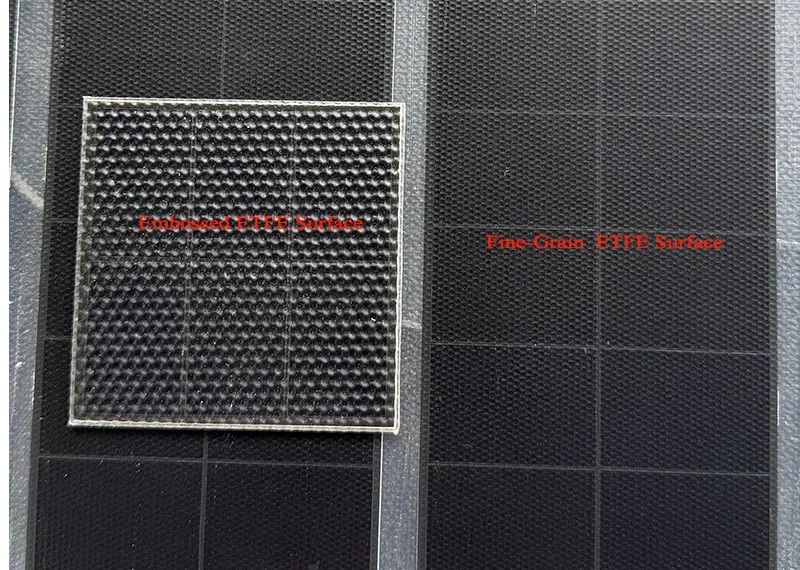
One common misunderstanding is that all ETFE solar panels must have a pronounced, bumpy surface.
In practice, ETFE films can be supplied with different surface finishes, depending on material availability and manufacturing requirements.
For customized solar modules, two useful options to consider are embossed ETFE and fine-texture ETFE.
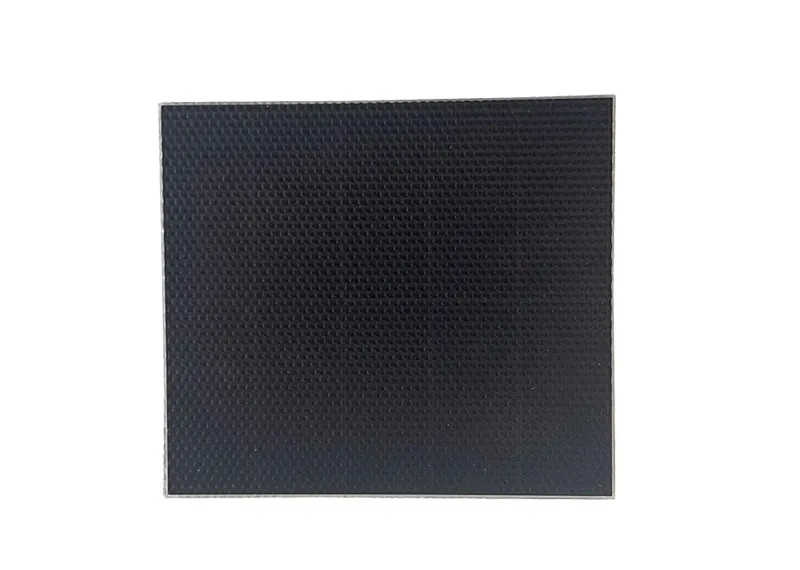
Embossed ETFE Surface
Embossed ETFE has a visible raised pattern, sometimes described as a honeycomb or textured finish.
The surface texture is relatively easy to recognize when viewed under angled light.
This finish is commonly used in various outdoor solar module designs.
Typical characteristics include:
- Visible embossed pattern
- Distinctive textured appearance
- Established use in solar module manufacturing
- Suitability for applications where a pronounced surface pattern is acceptable
The exact pattern depends on the ETFE film specification.
Fine-Grain ETFE Surface
For outdoor electronic products where visual appearance is important, a finer ETFE texture may be considered.
Compared with a pronounced embossed finish, fine-texture ETFE provides a more subtle surface appearance.
This may be particularly useful when the solar module is integrated into the visible surface of an electronic enclosure.
Examples include:
- Outdoor sensor housings
- GPS tracking devices
- Smart monitoring equipment
- Compact industrial electronics
- Products with strict cosmetic requirements
A finer texture can help create a more uniform-looking surface, although the solar-cell pattern may still remain visible underneath.
The final appearance also depends on:
- Solar-cell color
- Cell spacing
- Encapsulation materials
- PCB or backing color
- Surface lighting
- Viewing angle
Does Fine-Texture ETFE Cost More?
Not necessarily in every project, but it can.
Fine-texture ETFE may have different material availability, processing requirements, and cosmetic acceptance criteria.
In some customized manufacturing projects, a fine-texture finish can result in lower production yield or higher cosmetic rejection rates.
These factors may increase the final module cost.
For projects with strict appearance requirements, we recommend confirming the finish using physical samples before mass production.
Can ETFE Be Completely Smooth?
A smoother-looking ETFE surface may be possible depending on the film specification.
However, a smooth appearance should not be assumed to provide identical optical, mechanical, or manufacturing performance to an embossed film.
If a particular finish is required, the best approach is to review actual ETFE samples and evaluate the finished laminate.
Does ETFE Surface Texture Affect Solar Panel Performance?
Surface texture is not only an appearance consideration.
It can also influence how light interacts with the front surface of the solar module.
Different textures may affect reflection, scattering, and light transmission.
However, it is important not to assume that one ETFE texture will always produce more electrical power than another.
The final electrical performance depends on several factors:
- ETFE film optical properties
- Surface texture geometry
- Solar-cell technology
- Encapsulation materials
- Cell layout
- Lamination quality
- Measurement conditions
For example, a fine-texture ETFE module and an embossed ETFE module may use the same solar cells and have similar dimensions.
But their final electrical output should still be evaluated using the actual finished modules.
At XRSOLAR, we recommend confirming electrical performance and cosmetic appearance during sample evaluation when changing the ETFE surface specification.
Engineering Note: A different ETFE texture should be treated as a material and manufacturing change, not simply a cosmetic change. Appearance and electrical performance should both be checked.
Understanding the ETFE Solar Panel Layer Structure
To understand surface appearance, black borders, and waterproofing, it helps to look at the internal construction of a customized ETFE solar module.
A typical PCB-backed ETFE solar panel may use the following structure:
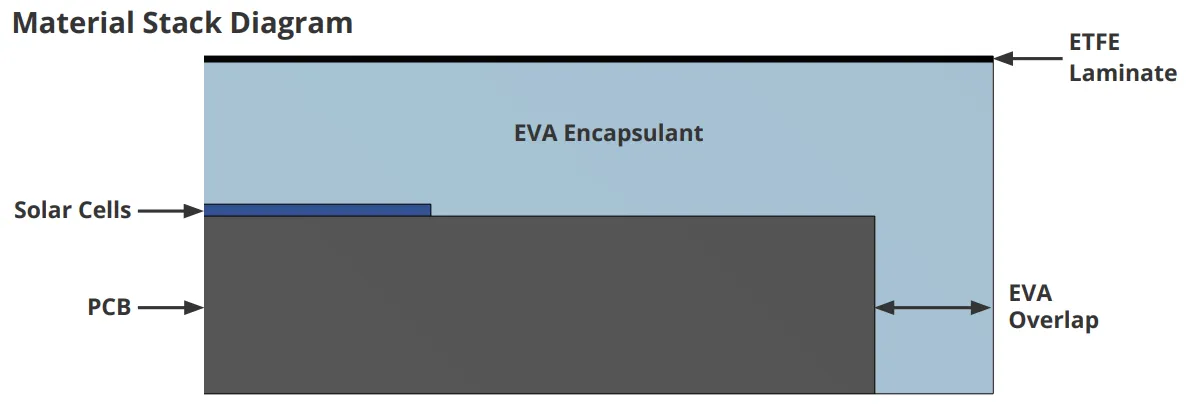
ETFE Front Film
The ETFE film forms the front protective surface.
It helps protect the underlying module structure from outdoor exposure while allowing sunlight to reach the solar cells.
EVA Encapsulant
EVA is used to encapsulate and bond the solar cells within the module.
It helps maintain the internal structure and contributes to the protection of the electrical components.
Solar Cells
The solar cells convert sunlight into electrical energy.
Depending on the project, different cell technologies and layouts may be considered to meet the required voltage, power, and available area.
PCB Backing
The PCB provides a supporting structure for the module.
Depending on the design, it may also support electrical connections, mounting features, and customized integration requirements.
The backing color can influence the visible appearance of the finished solar panel.
Why Is There a Border Around the Solar Cells?
Customers sometimes notice a black or transparent area around the solar cells and ask:
“Why can’t the solar cells extend all the way to the edge?”
This is an important manufacturing and reliability question.
The visible border may include:
- Exposed backing material
- Encapsulation material
- Space for electrical insulation
- Cell positioning tolerance
- Lamination and edge-sealing allowance
For example, a black area around the solar cells may be caused by the black PCB backing being visible through the encapsulation structure.
It does not necessarily mean that the black area is EVA.
Why Is Edge Spacing Necessary?
Solar cells cannot always be positioned directly against the finished outer edge of a laminated module.
The design normally needs to allow appropriate space for:
Electrical Insulation
The solar-cell circuit and conductive components need suitable separation from exposed edges and mounting features.
Lamination
The encapsulation materials need sufficient coverage around the cells.
Manufacturing Tolerance
Cell positioning, lamination, and final trimming all have manufacturing tolerances.
Environmental Protection
The edge design is part of the complete moisture-protection strategy.
Reducing the border may be possible, but the minimum acceptable spacing depends on the specific construction and manufacturing process.
Can the Border Be Made Smaller?
In some projects, yes.
The cell layout, PCB dimensions, and encapsulation structure can be reviewed to determine whether the visible border can be reduced.
However, removing necessary edge allowance simply to improve appearance may create reliability risks.
For this reason, the border should be treated as an engineering feature—not just unused space.
Waterproofing Depends on the Complete Solar Module
For permanently installed outdoor devices, waterproofing is often one of the most important requirements.
However, selecting ETFE as the front material does not automatically make the entire solar-powered device waterproof.
The complete module design needs to consider:
- Front surface protection
- Lamination quality
- Edge sealing
- Rear structure
- Cable exit
- Electrical connection
- Mounting holes
- Device enclosure interface
For example, a solar module may have a tested waterproof rating while the connector or enclosure connection has a different protection level.
These parts should be evaluated separately.
Solar Module vs Complete Device Protection
A useful distinction is:
Solar Module Protection
The protection provided by the laminated solar panel and its construction.
Connection Protection
The protection provided by cable exits, connectors, and electrical interfaces.
Enclosure Protection
The protection provided by the customer’s device housing, seals, and installation design.
All three need to work together for reliable outdoor operation.
For XRSOLAR ETFE modules designed and tested to IP67, the applicable protection scope should be confirmed for the specific construction. The connector and final device assembly should not be assumed to have the same rating.
Engineering Note: Waterproof performance should be evaluated at the complete assembly level. A waterproof solar module does not automatically make the cable connection or device enclosure waterproof.
Can an ETFE Solar Panel Be Glued to a Device Enclosure?
Yes. Adhesive mounting can be considered for many customized ETFE solar modules.
This is particularly useful for compact outdoor devices where the solar panel needs to become part of the product housing.
A typical installation may involve:
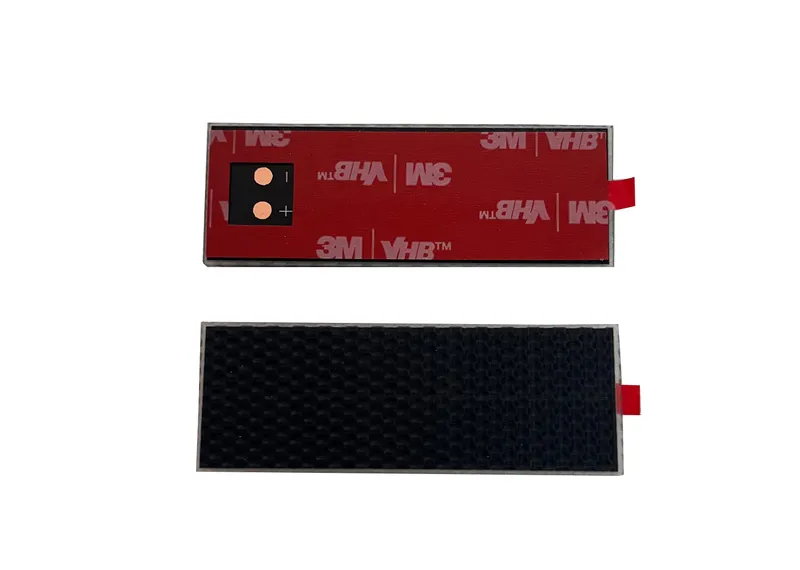
Depending on the project, possible mounting solutions include:
- 3M adhesive tapes
- Structural adhesive
- Customized adhesive backing
- Recessed enclosure mounting
- Mechanical mounting combined with sealing
What Should Be Checked Before Adhesive Mounting?
Enclosure Material
Different plastics, metals, and coated surfaces have different bonding characteristics.
Surface Preparation
The bonding surface should be suitable for the selected adhesive system.
Outdoor Exposure
UV, temperature changes, moisture, and environmental conditions can affect long-term adhesive performance.
Mechanical Loads
The design should consider vibration, thermal expansion, handling, and other forces.
Water Sealing
The adhesive joint should not automatically be treated as a complete waterproof seal without appropriate design and testing.
Adhesive vs Screw Mounting
Adhesive mounting can provide a clean appearance without visible fasteners.
Screw mounting may provide a more direct mechanical attachment, but mounting holes and sealing details need to be considered.
The most appropriate method depends on the enclosure structure and operating environment.
For a more detailed comparison of both installation methods, read our Solar Panel Mounting Guide for IoT Devices.
How to Choose Between PET and ETFE for Your Project
When selecting a front material for a custom solar panel, the decision should begin with the actual product requirements.
Consider PET When:
- Material cost is a major design factor
- A smooth or glossy appearance is preferred
- The intended exposure conditions are compatible with the selected PET grade
- Suitable material and module reliability data are available
- The required service life can be supported by testing
Consider ETFE When:
- Continuous outdoor exposure is expected
- Strong inherent UV resistance is important
- A lightweight module is required
- Different surface textures are being evaluated
- The module needs to integrate into a customized enclosure
- Long-term weathering performance is a key design consideration
Compare Both When:
- The final product appearance is important
- Cost and outdoor durability need to be balanced
- The enclosure design is still being developed
- The project requires specific waterproofing or mounting features
- The expected service life has not yet been finalized
For many outdoor electronic applications, ETFE is a practical material to evaluate first.
However, the final decision should consider the entire solar module and device assembly.
What Information Should You Provide for a Custom Solar Panel?
If you are developing an outdoor electronic product, the following information can help the engineering team evaluate the appropriate solar module construction.
Electrical Requirements
- Required solar-panel voltage
- Required power output
- Battery type and capacity
- Charging controller input voltage range
Mechanical Requirements
- Maximum available dimensions
- Required thickness
- Enclosure material
- Mounting method
- Cable exit position
- Connector requirements
Appearance Requirements
- PET or ETFE preference
- Embossed or fine-texture finish
- Solar-cell appearance
- Backing color
- Visible border requirements
Environmental Requirements
- Indoor or outdoor use
- Expected UV exposure
- Temperature range
- Moisture and waterproofing requirements
- Expected operating life
For projects with strict cosmetic requirements, reference photographs or physical samples can be especially helpful.
They allow the solar module manufacturer to understand the expected finish before preparing prototypes.
Design Takeaway: Material, Appearance and Structure Must Work Together
PET vs ETFE is not simply a comparison between two front films.
For a customized outdoor solar module, the final design depends on the relationship between:
Front Material → Surface Texture → Cell Layout → Encapsulation → Backing Structure → Mounting → Outdoor Protection
An ETFE module with a fine-textured finish may provide the appearance required for a compact electronic device.
But the design must still consider the solar-cell layout, edge sealing, backing material, and enclosure interface.
Similarly, choosing ETFE for its UV resistance does not eliminate the need to evaluate the complete module’s environmental performance.
The most reliable approach is to review the complete product requirements before finalizing the solar-panel construction.
The solar panel should be designed around the product—not the product around the solar panel.
Developing a Custom Solar Panel for an Outdoor Device?
XRSOLAR supports customized solar modules for outdoor IoT devices, environmental monitoring equipment, smart agriculture systems, and other industrial electronics.
Depending on the project, we can evaluate:
- PET and ETFE front materials
- Embossed and fine-texture ETFE finishes
- Custom dimensions and shapes
- Solar-cell configuration
- Black PCB backing
- Edge design
- Adhesive or mechanical mounting
- Cable and connector configurations
- Outdoor protection requirements
For an initial engineering evaluation, send us:
Application + Required Voltage & Power + Available Area + Surface Finish + Mounting Method + Outdoor Environment
Our team can review the requirements and help develop a solar module construction suitable for your product.
→ Discuss Your Custom Solar Module
0 Comments