
In custom solar panel projects, customers do not only care about power and voltage.
For OEM products, details such as:
- Surface texture
- Appearance consistency
- Color
- Thickness
- Edge finishing
can be just as important as electrical performance.
Recently, a U.S. customer asked XRSOLAR to customize an approximately 1.3W, 5V ETFE solar panel.
After the electrical specification, dimensions, and basic structure had already been confirmed, the customer requested another change:
Replace the original honeycomb-textured ETFE surface with a finer-grain ETFE surface.
At first glance, this may sound like a simple cosmetic change.
In practice, however, changing the ETFE surface texture can affect material selection, optical performance, lamination appearance, production yield, and mass-production consistency.
Project Overview
The project involved a small custom ETFE solar panel for an OEM outdoor electronic product.
| Project Item | Requirement |
|---|---|
| Power | Approx. 1.3W |
| Operating Voltage | 5V class |
| Surface Material | ETFE |
| Solar Cell | High-efficiency crystalline silicon cell |
| Application | OEM outdoor electronic product |
| Original Surface | Honeycomb-textured ETFE |
| Updated Surface | Fine-texture ETFE |
| Main Customer Concern | Appearance and production consistency |
The customer was not simply sourcing a standard solar panel.
The module needed to become part of the final product design.
That meant appearance was also part of the technical specification.
The Customer’s Request
The original sample used a honeycomb ETFE surface, which is one of the more common surface textures used for lightweight outdoor solar modules.
This type of ETFE offers several manufacturing advantages:
- Mature production process
- Stable lamination performance
- Relatively consistent appearance
- Better production yield
- Easier cosmetic quality control
After reviewing the sample, however, the customer wanted a more refined surface appearance.
The request was to change the ETFE surface from a visible honeycomb texture to a fine-grain texture.
The goal was to make the finished solar panel look:
- Cleaner
- More uniform
- More refined
- Better integrated with the customer’s final product
For OEM projects, this kind of requirement is common.
The solar panel is not only an energy source. It is also part of the exterior design of the finished device.
Why Surface Texture Matters
It is easy to think that ETFE is only the top protective layer and that changing the texture should have little impact.
In reality, the surface texture can influence several parts of the final product.
Product Appearance
Different ETFE textures reflect and scatter light differently.
A honeycomb texture is usually more visible, while a fine-grain texture can create a more uniform and subtle surface.
For products with:
- Black housings
- Premium industrial design
- Outdoor electronics
- Monitoring equipment
- Consumer-facing enclosures
the visual consistency of the solar panel can become an important part of the product design.
Light Transmission and Output
Before sunlight reaches the solar cells, it passes through the ETFE surface.
Different textures can slightly affect:
- Light reflection
- Light scattering
- Incident angle
- Effective transmission
For this reason, changing the surface texture should not automatically be treated as a purely cosmetic modification.
Even when the material remains ETFE, the electrical output should still be rechecked during the sample stage.
The correct approach is:
Change the material finish → Build a sample → Reconfirm electrical performance
rather than assuming the output will remain exactly the same.
Lamination Appearance
A finer ETFE texture can also make small cosmetic defects easier to see.
During lamination, the production team needs to pay closer attention to details such as:
- Small bubbles
- Surface marks
- Dust or contamination
- Uneven pressure
- Material tension
- Local surface irregularities
A stronger honeycomb texture can visually hide some small differences.
A fine-grain surface is less forgiving.
This means the customer may receive a more refined final appearance, but the factory must apply stricter cosmetic control during production.
If you are comparing ETFE solar panels with flexible solar panels, it is important to understand that ETFE describes the surface material, while “flexible” describes the mechanical structure of the complete module.
The Engineering Challenge
The real challenge was not simply finding another ETFE film.
The key engineering question was:
How can we change the surface appearance while keeping the original electrical design stable and maintaining production consistency?
We focused on three main areas.
Electrical Performance
The original solar cell layout, voltage, and target power had already been confirmed.
Therefore, when changing the ETFE texture, we tried to keep the following unchanged:
- Solar cell arrangement
- Electrical connection
- Voltage design
- Main dimensions
- Basic module structure
This helped avoid redesigning the complete solar module just because of a surface appearance change.
After the material change, the sample still needed to be tested to confirm that the output remained within the required tolerance.
Appearance Consistency
The customer had relatively high expectations for the surface appearance.
So the new ETFE material needed to be evaluated not only as a raw material, but also after lamination.
We checked:
- Grain consistency
- Surface reflection
- Visual uniformity
- Possible color differences
- Edge appearance
- Consistency between samples
For OEM products, one important lesson is:
A good-looking prototype does not automatically guarantee consistent mass production.
The real challenge is making sure the same appearance can be reproduced across hundreds or thousands of pieces.
Production Yield
Fine-texture ETFE generally requires stricter cosmetic inspection.
This can have an impact on production yield.
For example, products that might have passed cosmetic inspection with a stronger surface texture may be rejected under a finer surface finish because small defects become more visible.
This can increase:
- Material loss
- Rework
- Sorting time
- Cosmetic rejection rate
- Quality-control cost
For this reason, we explained to the customer that:
Fine-texture ETFE provides a cleaner appearance, but it also requires stricter cosmetic control during production.
For customized OEM products, appearance upgrades are not always cost-neutral.
They can influence the entire manufacturing process.
Sample Evaluation
After confirming the new fine-texture ETFE material, we produced updated samples and evaluated several areas.
Appearance
We checked:
- Surface texture
- Grain uniformity
- Lamination appearance
- Edge condition
- Solar cell positioning
- Overall visual consistency
Electrical Output
We reconfirmed:
- Open-circuit voltage
- Short-circuit current
- Operating voltage
- Output stability
For a small solar panel, we mainly wanted to confirm that the surface change did not create an unacceptable change in electrical output.
Mechanical Structure
We also checked:
- Overall thickness
- ETFE bonding
- Edge structure
- Panel flatness
- Installation compatibility
The goal was to improve appearance without creating new mechanical or installation issues.
From Sample to Mass Production
After the updated sample was accepted, the next step was not simply to start mass production.
For appearance-sensitive OEM projects, an important transition is:
Sample Standard → Production Standard
The approved sample should become a reference for future production.
Before mass production, it is useful to define:
- Acceptable surface variation
- Cosmetic defect limits
- Color consistency
- Electrical tolerance
- Dimensional tolerance
- Inspection criteria
Without a clear production standard, a common problem can occur:
The customer approves one very attractive sample, but there is no agreed definition of what is acceptable in mass production.
That is why appearance standards should be discussed before volume production begins.
Why We Did Not Simply Keep the Original ETFE
From a manufacturing point of view, continuing to use the standard honeycomb ETFE would have been easier.
It offered:
- Higher process familiarity
- More stable yield
- Easier cosmetic control
- Lower manufacturing risk
However, OEM customization is not only about manufacturing convenience.
If the solar panel is directly integrated into the customer’s final product, then the appearance of the solar panel should also support the industrial design of that product.
This is one of the main differences between a standard solar panel and a custom solar module.
What the Customer Needed Was Not Just 1.3W
On paper, the specification looked simple:
1.3W + 5V + ETFE
But the customer’s real requirement was more specific:
A custom small solar panel that could match the appearance of the final product while maintaining stable electrical performance.
That is why OEM solar projects should not be evaluated only by:
- Wattage
- Voltage
- Size
The design also needs to consider:
- Appearance
- Surface texture
- Installation method
- Mechanical structure
- Production consistency
The final module must satisfy both engineering requirements and product design requirements.
Engineering Takeaway
Changing the ETFE surface texture is not only a cosmetic change.
It can affect the complete chain:
Material Selection → Optical Performance → Lamination → Appearance Standard → Production Yield → Quality Control
For the customer, a fine-grain ETFE surface can create a cleaner and more refined product appearance.
For the manufacturer, it requires additional evaluation of materials, process control, inspection, and production consistency.
For custom solar panel projects, we therefore recommend confirming the following as early as possible:
- ETFE texture
- Surface gloss
- Product color
- Cosmetic acceptance standard
- Target electrical performance
These details are easier to manage when they are defined before the final design is locked.
From Prototype to Mass Production
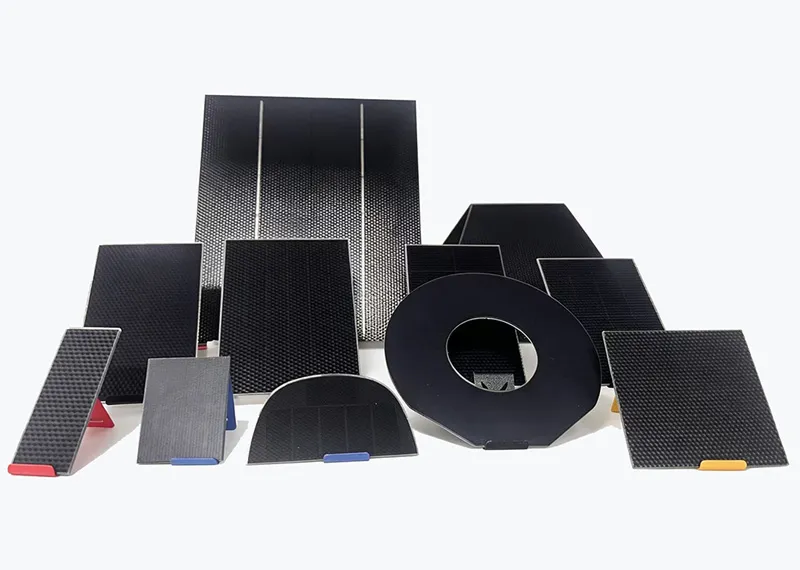
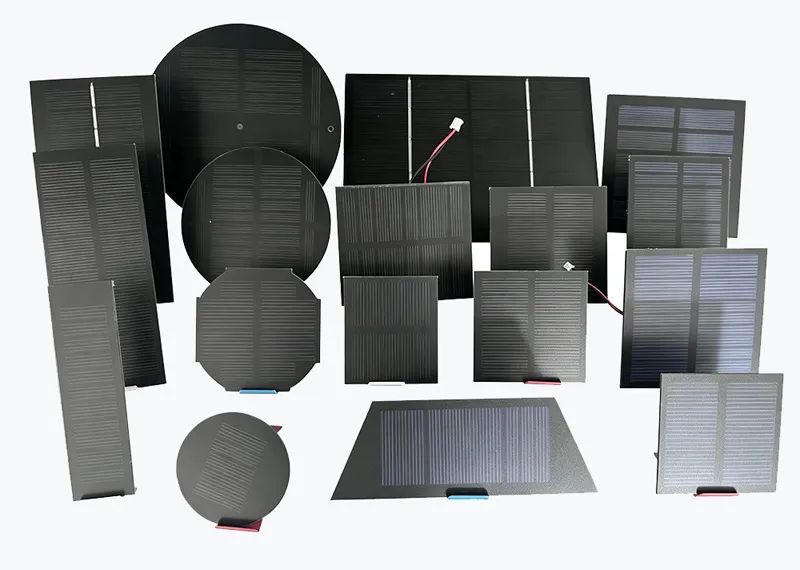
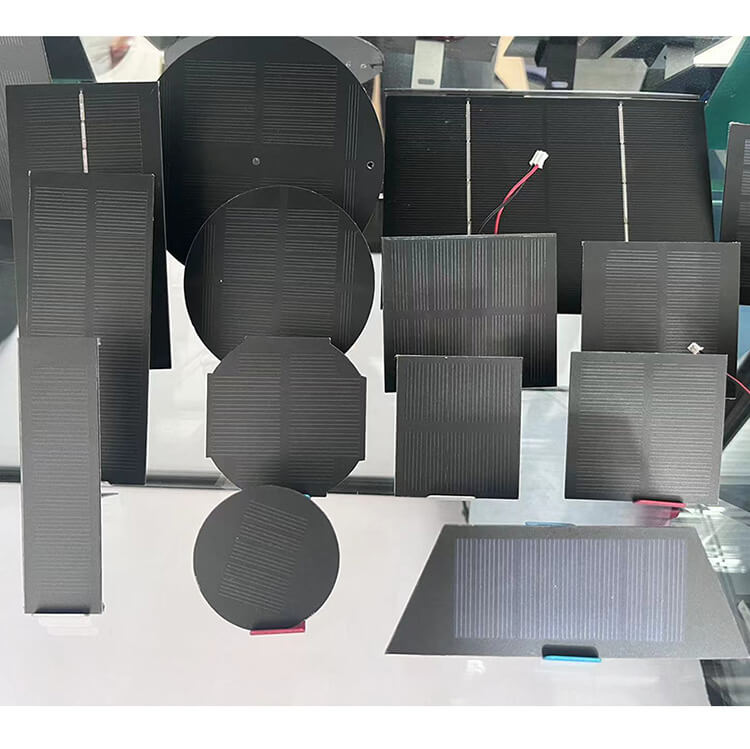
XRSOLAR develops Custom Solar Panels for OEM and outdoor applications.
We can customize:
- Solar panel size
- Voltage
- Power
- Solar cell type
- ETFE surface texture
- Thickness
- Cable position
- Mounting holes
- Adhesive backing
- Solar cell layout
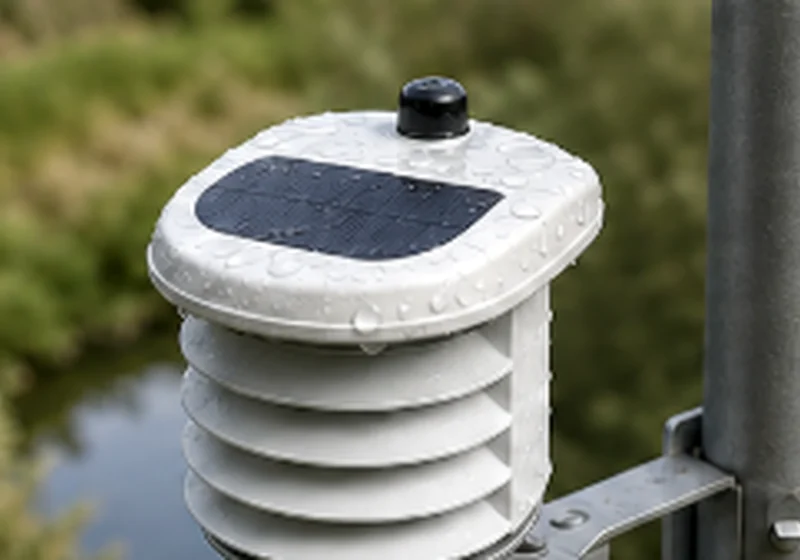
If your solar panel needs to be integrated into an outdoor device, sensor, monitoring system, or other OEM product, you can send us:
- Product photos
- CAD drawings
- Available solar area
- Required voltage
- Target power
- Installation method
- Surface appearance requirements
Our engineering team can help design the solar module around your final product instead of forcing your product to fit a standard solar panel.
0 Comments