
When buyers search for lightweight or custom solar modules, two terms often appear together:
ETFE solar panel
and
flexible solar panel
They are related, but they do not describe the same thing.
One describes a material choice.
The other describes a mechanical structure.
This distinction matters because a solar panel can use an ETFE front layer and still be relatively rigid, while a flexible solar panel may use ETFE as part of a more bendable construction.
For OEM and custom projects, understanding the difference helps avoid incorrect assumptions about thickness, bending radius, mounting method, durability, and application.
ETFE Describes the Surface Material
ETFE stands for ethylene tetrafluoroethylene.
In a solar module, ETFE is typically used as the outer protective layer on the front surface.
It is selected because it can provide several useful properties for lightweight outdoor solar products, including:
- Good UV resistance
- Good outdoor weather resistance
- Low weight
- Textured surface options
- Good transparency
- Resistance to dirt and surface contamination
- Better suitability for lightweight module structures than conventional glass
However, ETFE itself does not define how flexible the finished solar panel will be.
The complete module structure still depends on:
- Solar cell type
- Cell dimensions
- Encapsulation system
- Substrate material
- PCB or backsheet structure
- Total panel thickness
- Interconnection design
- Adhesive or backing structure
So the correct engineering question is not:
“Is ETFE flexible?”
The better question is:
“How flexible is the complete ETFE solar module structure?”
Flexible Describes Mechanical Behavior
“Flexible solar panel” describes how the complete panel behaves mechanically.
A flexible module is designed to tolerate a certain amount of bending or curvature.
That flexibility may come from several design choices:
- Thin total construction
- Flexible substrate
- Small or segmented solar cells
- Optimized cell spacing
- Lightweight encapsulation
- Reduced rigid reinforcement
- Mechanical design around the intended bending direction
This means flexibility is a property of the whole panel, not simply the top film.
Two panels may both use ETFE on the front, but one may only tolerate a gentle curve while the other may be designed for significantly more bending.
That is why “ETFE panel” and “flexible panel” should not be used as interchangeable terms in technical discussions.
A Simple Way to Understand the Difference
The distinction can be summarized like this:
| Term | What It Describes | Main Engineering Question |
|---|---|---|
| ETFE Solar Panel | Front surface material | What material protects the panel? |
| Flexible Solar Panel | Mechanical structure | How much can the panel bend or conform? |
An ETFE solar panel can be:
- Semi-rigid
- Slightly flexible
- Flexible
A flexible solar panel can also use different material systems depending on the product design.
In many outdoor OEM applications, ETFE and flexible construction are combined because the two characteristics work well together.
But they should still be evaluated separately.
Why Buyers Often Confuse the Two
The confusion is understandable.
Many lightweight solar products use ETFE because it is suitable for outdoor, low-weight applications.
At the same time, many of those products are also marketed as flexible.
As a result, buyers sometimes assume:
ETFE = flexible
But that shortcut can create technical problems.
For example, a customer may ask for an ETFE solar panel and later expect it to wrap tightly around a curved enclosure.
Or a customer may ask for a flexible panel without defining:
- Required bending radius
- Curvature direction
- Whether bending is static or repeated
- Mounting method
- Available installation area
Those details are essential.
Without them, the term “flexible” is too general for engineering.
ETFE Does Not Mean Foldable
This is one of the most important points.
A solar module using ETFE should not automatically be treated as foldable.
Most custom ETFE modules are designed for:
- Lightweight installation
- Slight curvature
- Curved enclosures
- Portable devices
- Marine surfaces
- Outdoor electronics
- OEM housings
They are not necessarily designed for repeated folding.
There is a major difference between:
Conforming to a curved surface once
and
Being folded repeatedly during use
Repeated bending places much greater stress on:
- Solar cells
- Busbars
- Solder joints
- Interconnections
- Encapsulation layers
- Cable exit areas
For this reason, a panel intended for repeated folding should be designed specifically for that mechanical duty.
The Real Limitation Often Comes From the Solar Cells
The front ETFE film may be able to bend significantly.
The solar cells underneath are different.
Crystalline silicon cells are mechanically fragile compared with polymer surface films.
When a module bends, the cells and electrical interconnections experience stress.
If the bend is too sharp, the risks can include:
- Cell microcracks
- Broken electrical connections
- Power loss
- Hot spots
- Mechanical fatigue
- Shortened service life
That means the safe bending limit of a flexible solar module is usually controlled by the complete construction, especially the solar cell layout.
This is why cell size and cell arrangement are critical in custom curved-surface projects.
Cell Layout Can Improve Flexibility
For custom flexible solar modules, the cell layout can often be optimized around the installation surface.
Instead of using the largest possible cell pieces, the engineering team may use:
- Smaller solar cell sections
- Different cell orientation
- Adjusted cell spacing
- Different string layouts
- Separate electrical sections
The goal is not simply to maximize active cell area.
The goal is to balance:
Power + Voltage + Available Area + Curvature + Mechanical Reliability
For curved surfaces, placing high-stress bending zones directly across large solar cells should be avoided where possible.
This can improve long-term reliability.
Thickness Also Affects Flexibility
A thinner module is usually easier to bend, but thickness alone does not determine flexibility.
The final stiffness also depends on the materials used inside the panel.
For example, two solar panels with similar total thickness may behave very differently if one uses a rigid PCB substrate and the other uses a more flexible backing structure.
When specifying a custom module, it is better to discuss:
- Total thickness
- Substrate material
- Curvature requirement
- Installation method
- Mechanical support
rather than simply asking for “the thinnest panel.”
The thinnest design is not always the most reliable design.
ETFE Is Often Chosen for Outdoor Flexible Applications
Although ETFE and flexible are technically different concepts, they are frequently combined for good reason.
For outdoor OEM applications, ETFE can be a strong front-surface choice because it offers a useful balance of:
- Weight
- Durability
- UV resistance
- Appearance
- Surface protection
- Outdoor suitability
This makes ETFE especially suitable for applications such as:
- IoT devices
- Remote monitoring equipment
- Smart agriculture sensors
- Marine electronics
- GPS tracking equipment
- Outdoor control systems
- Curved equipment housings
In these applications, the module often needs to be both lightweight and mechanically adaptable.
When a Semi-Rigid ETFE Panel May Be Better
Not every application needs maximum flexibility.
In some OEM products, a semi-rigid ETFE module may actually be the better choice.
Examples include:
- Flat electronics enclosures
- Sensor housings
- Control cabinets
- Agricultural monitoring devices
- Fixed outdoor equipment
A slightly stiffer construction may offer benefits such as:
- Easier assembly
- Better dimensional stability
- More stable mounting
- Reduced mechanical stress on cells
- Better repeatability in mass production
So “more flexible” is not automatically “better.”
The correct structure depends on the installation environment.
When a Flexible Construction Makes More Sense
A more flexible design becomes useful when the installation surface itself requires it.
Typical cases include:
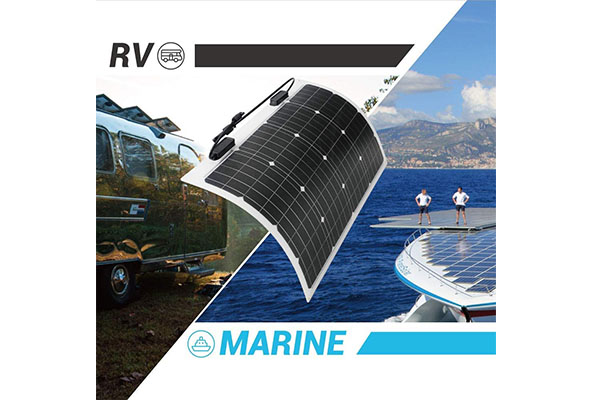
- Curved boat roofs
- Vehicle roofs
- Cylindrical housings
- Rounded outdoor enclosures
- Portable equipment
- Curved industrial surfaces
In these projects, the solar panel should be developed around the actual geometry of the installation surface.
A 2D drawing alone may not always be enough.
For more complex curved surfaces, it is better to provide:
- CAD files
- 3D models
- Radius dimensions
- Surface drawings
- Installation photos
- Mounting details
This gives the supplier enough information to evaluate the real mechanical requirements.
Static Curvature and Dynamic Bending Are Different
Another important engineering distinction is whether the panel will remain in one curved position or move repeatedly.
Static curvature
The panel is installed onto a curved surface and remains fixed.
This is common in:
- Marine equipment
- Vehicle installations
- Outdoor housings
- Fixed curved structures
Dynamic bending
The panel is bent repeatedly during operation or transport.
This may happen in:
- Foldable products
- Rollable equipment
- Moving mechanical systems
Dynamic bending is much more demanding.
A module that performs well under static curvature may not be suitable for repeated bending cycles.
This should be defined at the beginning of the project.
Mounting Method Can Change the Required Structure
The mounting method also affects the difference between a standard ETFE module and a flexible module.
Possible mounting methods include:
- 3M adhesive
- Structural adhesive
- Silicone adhesive
- Screws
- Mounting holes
- Mechanical frames
- Integrated housings
For curved surfaces, adhesive mounting can help the panel follow the installation geometry.
However, the surface should be smooth and well supported.
Sharp pressure points, uneven adhesive, screw heads, or unsupported sections can create stress in the cells.
Mechanical installation should therefore be considered during panel design—not after production is complete.
Cable Position Matters More on Flexible Panels
Cable routing is another small detail that can become a large problem.
For flexible or curved modules, the cable exit should ideally stay away from the main bending area.
Possible options include:
- Rear cable exit
- Side cable exit
- Edge cable exit
- Solder pads
- Custom connector positions
If the cable is placed directly in a high-stress zone, repeated mechanical loading can affect the connection.
For OEM projects, the cable location should be confirmed together with the enclosure design.
ETFE vs Flexible: Which One Should You Specify?
If you are sourcing a custom solar module, it is better not to choose between “ETFE” and “flexible” as though they are competing options.
Instead, define both separately.
Material requirement
Ask:
- Do I need ETFE?
- What surface texture do I want?
- What outdoor exposure is expected?
- What appearance is required?
Mechanical requirement
Ask:
- Does the panel need to bend?
- What is the bending radius?
- In which direction?
- Is the curve permanent?
- Is repeated bending required?
- How will the panel be mounted?
These questions lead to a much more accurate specification.
A Better RFQ Format
Instead of sending:
“We need a flexible ETFE solar panel.”
A stronger RFQ would look like this:
We need a custom ETFE solar module for a curved outdoor enclosure.
Available area: 180 × 90 mm
Required voltage: 6V
Target power: 2W
Surface: single-direction curve
Approximate bending radius: 250 mm
Mounting: adhesive
Cable exit: rear side
Application: outdoor monitoring device
This gives the engineering team enough information to evaluate both the material structure and the mechanical design.
Engineering Takeaway
ETFE and flexible are not two versions of the same thing.
They describe different parts of the design.
ETFE describes the front protective material.
Flexible describes the mechanical behavior of the complete solar module.
A good custom solar panel project should define both.
The final design should consider:
Surface Material → Cell Layout → Substrate → Thickness → Bending Requirement → Mounting → Electrical Design
That is a much more reliable approach than simply asking for an “ETFE flexible panel.”
Need Help Selecting the Right Structure?
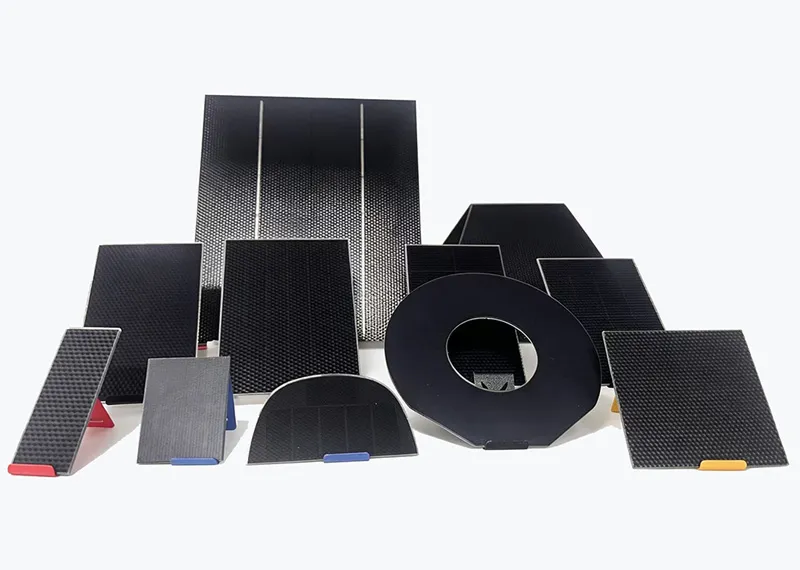
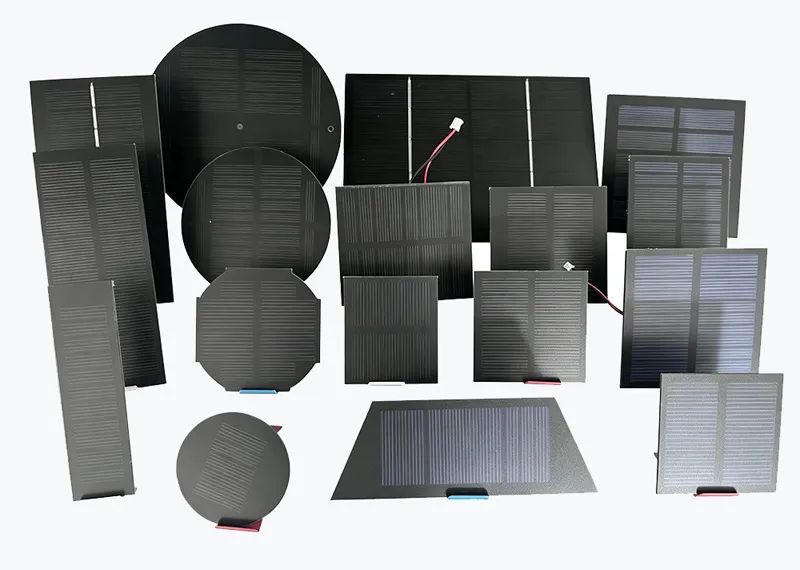
XRSOLAR develops custom solar modules for OEM and outdoor applications.
Depending on the project, we can customize:
- ETFE surface material
- Panel thickness
- Cell type
- Cell layout
- Voltage
- Power
- Panel shape
- Bending direction
- Cable position
- Mounting holes
- Adhesive backing
If your application includes a curved surface, space limitation, or special enclosure design, send us your CAD drawing, dimensions, battery information, and mounting requirements.
Our engineering team can help evaluate whether your project needs a semi-rigid ETFE module, a flexible structure, or a more customized mechanical design.
0 Comments